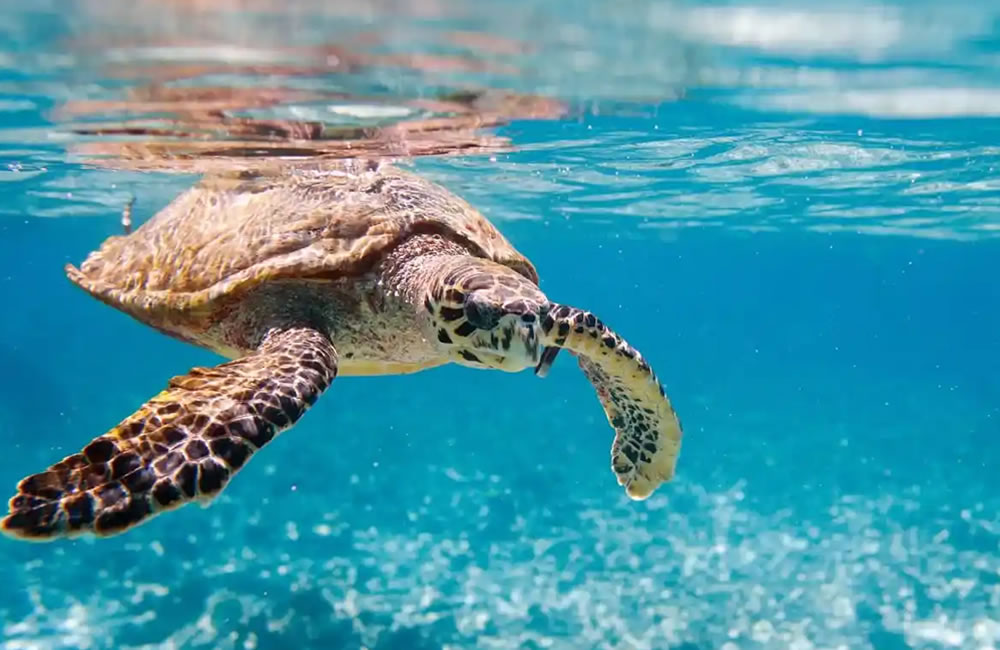
They may have outlived the mass-extinction of dinosaurs, but sea turtles face a new threat: tourism.
Sea turtles have been around for millions of years. They migrate long distances around the world, feeding on anything from jellyfish to sea urchins and sea grasses, but always return to the same beach they were born on to lay their eggs.
The female crawls ashore to lay up to 120 eggs, covers up the nest with sand using her flippers and returns to the sea, never to see her hatchlings.
The hatchlings will emerge from the nest in large groups and make a dash for the sea by following the light of the moon and stars reflecting in the sea. It is estimated that only around 1 in every 1000 of them will reach maturity in about 20 years and they may grow over 80 years old.
The ever increasing demand from tourism for pristine, sandy beaches – often favoured by sea turtles – has been detrimental to turtle nesting habitats worldwide. This development, combined with increasing pollution and by-catch of turtles out at sea, not to mention locations where turtle meat and eggs are still considered a delicacy, has lead to a global decline of sea turtle populations.
Sun beds, hotels and people on or adjacent to the beach have reduced the space available for nesting. ‘Beach cleaning’ with heavy machinery, sand extraction and erosion have changed the sand consistency of many beaches and even destroyed nests.
These are just some of the problems – turtles are very shy and all this activity on the beach may prevent them laying and cause them to abort their eggs. Lights from developments and hotels disorientate the hatchlings and prevent them finding their way to the sea.
Fortunately, there are many organisations and individuals trying to reverse the decline. They are working hard to minimise detrimental effects, educate the public and provide hands-on conservation and protection measures. Anyone can help turtles and the environment in general by being a conscientious traveller, supporting these organisations, or helping as a volunteer.
Why volunteer on a turtle project?
So it’s clear that sea turtle conservation is important for the continuing survival of these species, but there are many other reasons why sea turtle volunteering can be so rewarding.
Yes, it will probably be hard work – traipsing along miles of beach at 5am in the morning looking for signs of the elusive turtle (there is no guarantee you will actually see one!), but knowing you’re giving something back makes it all the more rewarding.
You’ll learn about endangered species and their wider ecosystems, gain an understanding of the environmental field, get to know a different culture, contribute to turtle conservation and all that while meeting some great people! And aside from that, if you are lucky enough to have an encounter with this ancient mariner, it is a humbling experience and something that will stay with you forever.
Things you can do on your holiday
There are several things you can do to help while on holiday in a sea turtle nesting area:
- Don’t visit the beach at night; you may disturb a turtle trying to nest or step on a hatchling
- Do not use torches or flashlights on the beach at night – it can distract hatchlings on their way to the sea. If you are staying near the beach, ensure your lights are turned off after dusk, or ask your hotel to.
- Do not buy any turtle products
- Clear your sunbed and umbrella off the beach at night and don’t leave any litter. It can obstruct the mother or trap the hatchlings, and plastic bags can in the sea be mistaken by turtles for jellyfish and ingested.
Turtle facts
- Turtles have lungs and can’t breathe under water, but sea turtles have been observed spending up to six hours under water, sleeping.
- Sea turtle mating habits acquired them status with the ancient Greeks as symbols for Aphrodite, goddess of love
- The biggest turtle ever recorded was a male leatherback, which was just under 3m long and weighed 916 kg
- Seven species of Marine Turtle swim the worlds’ oceans – all are threatened with extinction, several of which have been seen in British waters (mainly Leatherbacks and Loggerheads)